
On Wall Street, we are accustomed to a civilized rhythm: the 9:30 AM coffee, the 4:00 PM closing bell, and the weekend cocktail parties in the Hamptons. Traditional financial markets are merciful; they grant humans time to rest, allowing our cortisol levels a chance to recede.
Crypto has no such mercy.
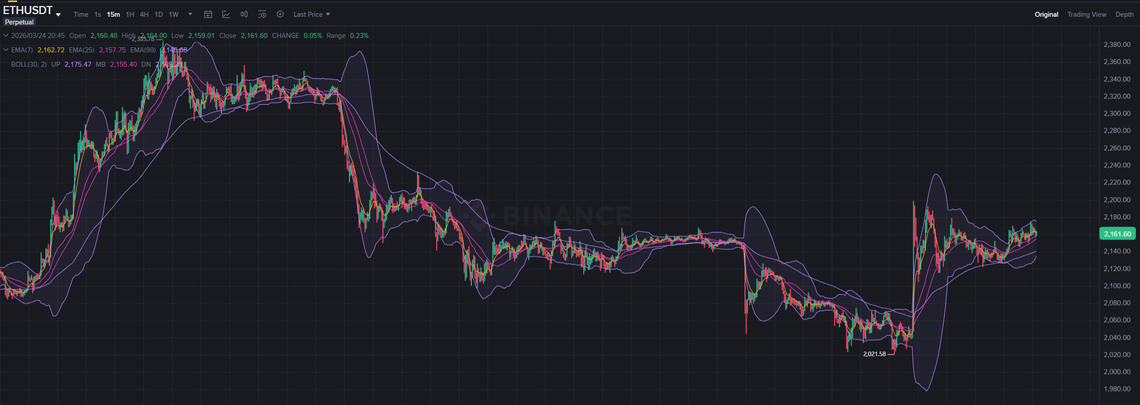
It is a 24/7/365 unrelenting centrifuge. When traders in London turn off the lights at Canary Wharf, algorithms in Tokyo are just warming up; while you are deep in REM sleep, Bitcoin might be undergoing its most violent 15-minute volatility event of the year. This is why discretionary trading in crypto is not just exhausting, it is biologically destined to fail—you are attempting to fight a global digital network running at light speed with a brain evolved to pick berries in the jungle.
Most retail investors misjudge the market, but more fatally, they misjudge their own physiological limitations. They believe that if they simply master technical analysis, they can beat the house. This is classic survivorship bias. You don’t hear from the accounts that were liquidated at 3:00 AM because they failed to stop-loss in time, because dead men tell no tales. In this arena, the greatest risk is not a broken indicator; it is your "biological latency."
The Winbay Quant Trade Agent exists to bridge this fatal physiological gap.
It doesn’t drink coffee, it requires no sleep, and it suffers from no dopamine-induced mood swings. It doesn't oscillate between "Greed" and "Fear" like a human does. In Winbay’s logic, there is no "faith" or "panic," only probability verified by data.
Consider the scenario: the market flash-crashes on a sudden regulatory rumor. The human trader’s first reaction is to freeze—the deer in the headlights—followed by a panic sell at the absolute bottom. Winbay, at that exact moment, sees only a shift in volatility readings and a touch of support levels. It executes its pre-programmed strategy in milliseconds—perhaps cutting losses decisively to preserve capital, or perhaps doubling down against the trend to capture the bounce.
That split-second decision is the watershed between the professional and the amateur.
This is why you need to cede operational control to the algorithm. It’s not about who is smarter; it’s about who is more stable. By backtesting through oceans of historical data, Winbay isn’t predicting the future—no one can do that—it is identifying rhymes. As Mark Twain famously noted, "History doesn't repeat itself, but it often rhymes." On a candlestick chart, these rhymes are mathematical opportunities with positive expected value. Whether it’s a trend-following strategy or mean reversion, Winbay’s mandate is to pull the trigger the instant these probabilities align, whether it’s high noon or 3:00 AM.
This doesn’t just liberate your time; it protects your principal. You cease to be the gambler trying to catch a falling knife with your bare hands, and become an asset manager overseeing an automated defense system.
To survive in this brutal digital wilderness, you must admit your human limitations. Don’t try to run this endless marathon with a nervous system. Hand the baton to the tireless code, and simply sign off on the boring, profitable PnL statements.
Disclaimer: This column represents the personal views of the author and does not constitute investment advice. The cryptocurrency market is a high-risk investment sector characterized by extreme price volatility. While quantitative strategies can strictly enforce trading discipline and operate around the clock, they remain subject to model risk, extreme market shocks, and systemic risks. Past performance in backtests is not a guarantee of future returns. Investors should make decisions cautiously based on their own risk tolerance. Betika Kenya login