| Token Icon | Coin | Current Price | 24H High | 24H Low | Volatility |
|---|---|---|---|---|---|
 |
Bitcoin | $91,580.7 | $93,708.50 | $90,987.10 | -2.27% |
 |
Ethereum | $3,193.48 | $3,295.90 | $3,186.6 | -3.11% |
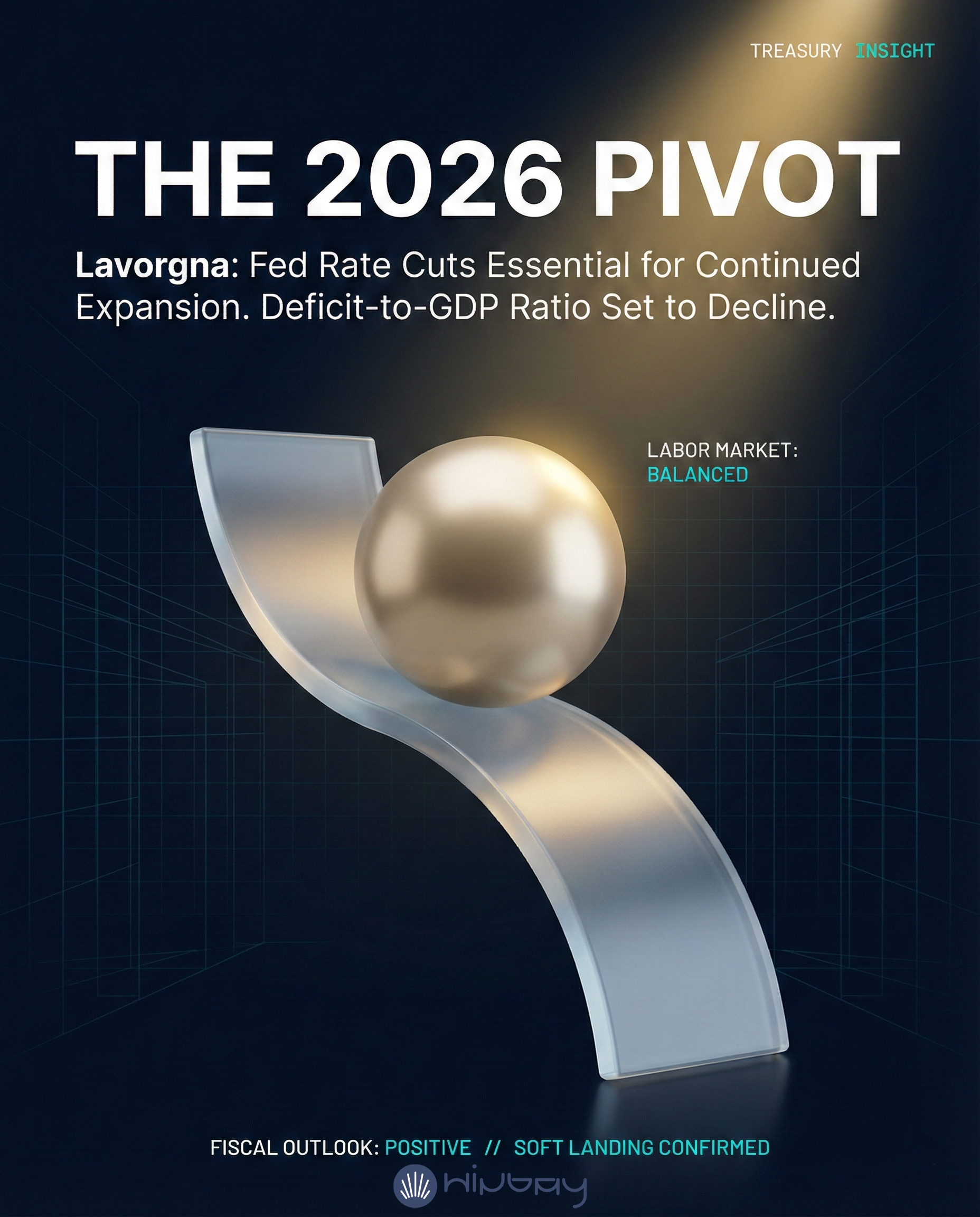
WASHINGTON – Joseph Lavorgna, a senior advisor to the U.S. Treasury, stated on Wednesday that the Federal Reserve should continue its cycle of interest rate cuts to support economic expansion. Additionally, he offered an optimistic forecast regarding the nation's fiscal health, predicting that the U.S. fiscal deficit as a percentage of GDP will see a further decline in 2026.
Labor Market "Very Balanced" In comments regarding the current economic landscape, Lavorgna emphasized that the employment sector appears stable. He characterized the unemployment rate as "very balanced," indicating that the labor market has normalized without tipping into a recession.
According to Lavorgna, this equilibrium provides the Federal Reserve with the necessary justification to lower borrowing costs. He argued that with inflation trending downward and the labor market stabilizing, the central bank should proceed with rate cuts to prevent real interest rates from becoming too restrictive and hindering growth.
Fiscal Outlook: Deficit Ratio Expected to Drop Addressing concerns over government spending, Lavorgna pushed back against fiscal pessimism. He projected that the ratio of the federal deficit to the Gross Domestic Product (GDP) is on track to decrease throughout 2026.
This projection is largely underpinned by expectations of robust nominal GDP growth. The advisor’s view aligns with a growth-focused fiscal strategy, suggesting that a rapidly expanding economy will naturally improve debt ratios, even amidst current spending levels.
Market Implications Lavorgna’s comments reinforce the administration’s pro-growth stance and align with market expectations for a continued dovish pivot from the Fed in the first quarter of 2026. Investors are now looking toward upcoming economic data releases to confirm whether the "soft landing" scenario remains firmly on track.