Summary: As the Trump administration enters its second year, the landscape of US crypto regulation is undergoing a historic transformation. Moving away from jurisdictional disputes, the SEC and CFTC are now engaging in close collaboration, driving "Project Crypto" and "Crypto Sprint" simultaneously to pave the way for the crypto market in 2026.
Article Body:
[ChainCatcher] — As the Trump administration officially steps into its second year, the regulatory fog that has long hovered over the US cryptocurrency market is rapidly lifting. According to recent regulatory developments, the dynamic between the U.S. Securities and Exchange Commission (SEC) and the Commodity Futures Trading Commission (CFTC) has shifted fundamentally—from a past of "jurisdictional tug-of-war" to an unprecedented model of "tight collaboration."
This shift not only marks a normalization of the regulatory environment but also signals that the US is poised to fully embrace crypto financial innovation by 2026.
SEC New Agenda: Paul Atkins and "Project Crypto"
Under the leadership of SEC Chairman Paul Atkins, the agency is pivoting away from the aggressive "Regulation by Enforcement" tactics of the past, adopting a more pragmatic path that encourages innovation.
Atkins and his team are fully advancing a regulatory initiative dubbed "Project Crypto." The core of this plan lies in redefining the legal status of tokens. The SEC is establishing a clear Token Classification System, distinctly categorizing crypto assets into "Digital Commodities," "Digital Collectibles," and "Security Tokens." This framework aims to resolve the "security definition" dilemma that has plagued the industry for years, providing clear compliance expectations for market participants.
Furthermore, the SEC has designated Asset Tokenization (RWA) as a regulatory priority and introduced various innovation exemption mechanisms, allowing compliant companies to test new financial products in a controlled environment. In the ETF sector, the SEC has further loosened restrictions, approving listing standards for a wider variety of crypto ETFs, opening the door for more diverse crypto assets to enter traditional financial markets beyond just Bitcoin and Ethereum.
CFTC Acceleration: Michael Selig and "Crypto Sprint"
Simultaneously, the CFTC is accelerating its regulatory pace. With new Chairman Michael Selig taking the helm, the CFTC is expected to play a more central role in regulating "digital commodities" like Bitcoin.
As a seasoned legal expert in the crypto industry, Selig’s appointment is seen as a significant signal of the CFTC’s embrace of digital assets. Under his guidance, the CFTC is utilizing the "Crypto Sprint" initiative to speed up the clarification of outdated rules and pass more adaptive regulations regarding immediate settlement and derivatives trading for digital assets.
The market widely anticipates that Selig will drive an expansion of the CFTC's authority over the spot market, particularly creating a clearer and more efficient regulatory framework for Bitcoin and stablecoins.
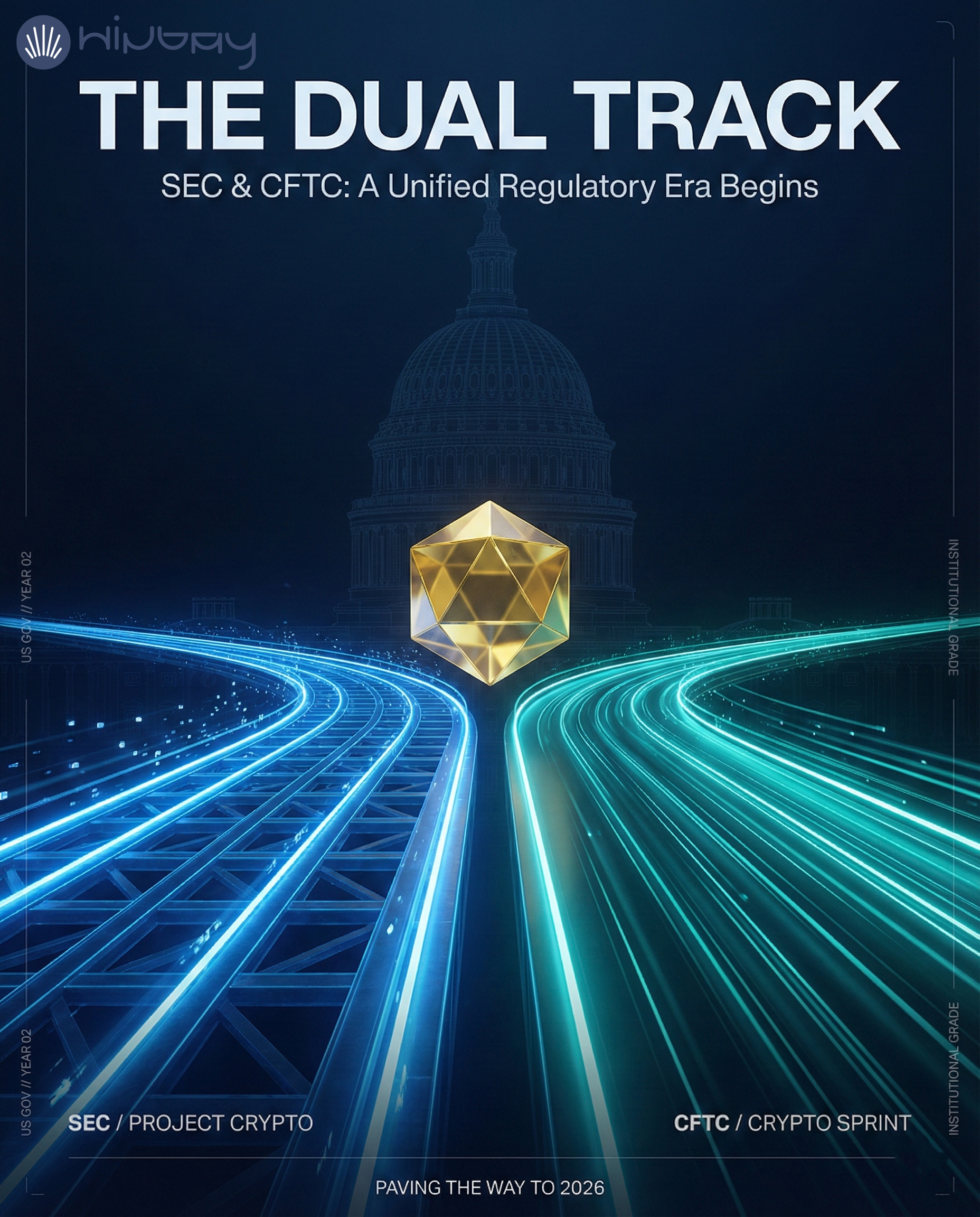
2026 Outlook: A Dual-Track Future
Industry experts predict that by 2026, US crypto regulation will formally crystallize into a "Dual-Track" structure:
- The SEC will focus on compliance pathways for security tokens and the on-chain migration of traditional financial assets (Tokenization);
- The CFTC will lead the regulation of spot and derivatives markets for mainstream crypto commodities like Bitcoin, ensuring market depth and liquidity.
This new normal of clear division and close cooperation is viewed as a critical step for the United States to reclaim its status as a global hub for crypto finance. For investors, this heralds the arrival of a safer, more transparent, and opportunity-rich institutional-grade market.